CHEMICAL REGULATION
BPCA has added its voice to calls for a more practical approach to UK REACH, warning that unnecessary duplication could affect product availability, costs and innovation across the pest management supply chain.
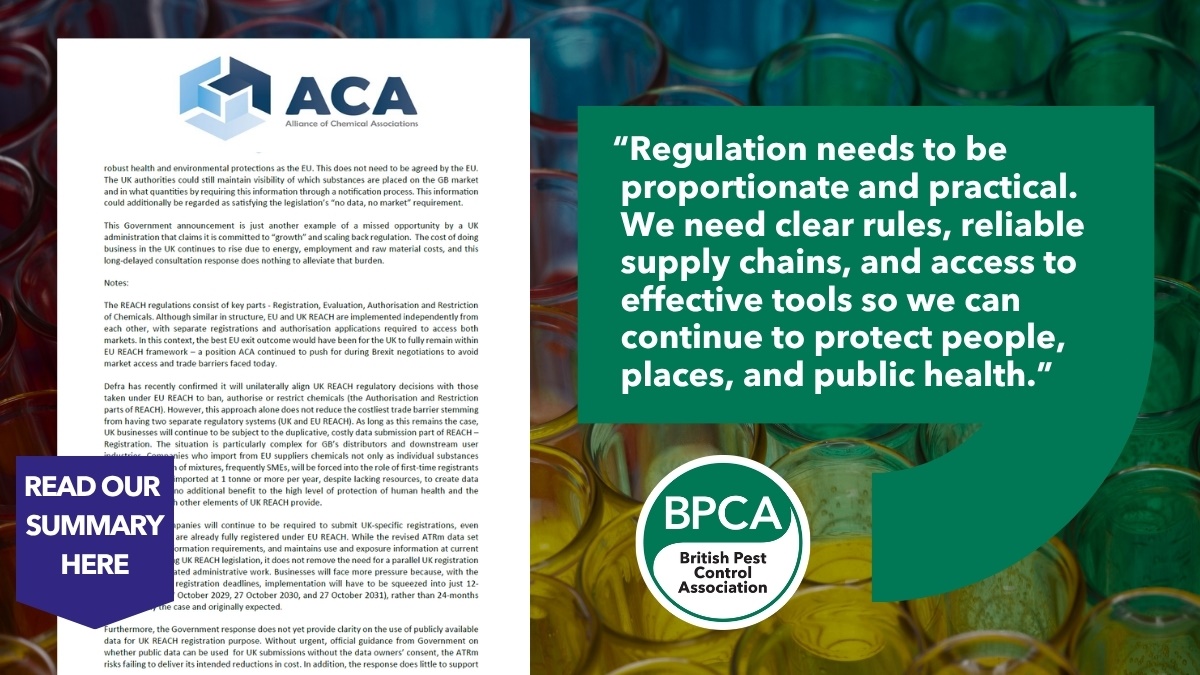
The Alliance of Chemical Associations (ACA), of which BPCA is a member, has responded to the Government’s recent publication on the UK REACH Alternative Transitional Registration model.
This matters because unnecessary regulatory duplication can affect the products pest professionals rely on to protect public health, food safety and the built environment. BPCA works through ACA to make sure the pest management sector’s voice is heard when decisions are made about chemical regulation, supply and access to future tools.
ACA represents 15 trade associations and around 1,400 companies across the chemical industry supply chain, including manufacturers, distributors and users of chemical products. Many of these businesses are SMEs.
SPEED READ
- ACA has responded to the Government’s latest position on the UK REACH Alternative Transitional Registration model
- We welcomed the decision not to require additional use and exposure information in the way originally proposed
- We remain concerned that businesses will still face duplicated data requirements for substances already registered under EU REACH
- The concern is that extra cost and admin could make Great Britain a less attractive market for chemical product innovation
- For pest professionals, that could mean fewer products, slower access to new tools and higher costs in the supply chain.
The issue at the heart of ACA’s response is simple: alignment between UK and EU chemicals regulation will not fully protect trade if the UK does not also recognise existing EU registrations.
UK REACH is the regulatory framework for chemicals in Great Britain. Since the UK left the EU, the Government has been developing its own registration requirements for substances already registered under EU REACH.
ACA and BPCA have welcomed the Government’s decision not to introduce the additional use and exposure information requirements originally proposed in the consultation. However, the alliance remains concerned that industry will still be expected to submit hazard information, use and exposure information and, in some cases, chemical safety assessments and reports.
ACA says this creates an extra burden without a clear benefit, particularly when relevant hazard and exposure information already exists through the European Chemicals Agency (ECHA) and in substance safety datasheets.
The Government has also indicated that the UK will broadly align with EU decisions on bans, authorisations and restrictions under REACH, with divergence only expected in exceptional cases. ACA argues that, if the UK is prepared to align with EU regulatory decisions, it should also recognise EU registrations rather than require businesses to duplicate work and costs.
ACA estimates that creating a separate UK chemicals database for substances already registered under EU REACH could cost industry more than £500 million.
Why this matters for pest professionals
Pest management depends on a tightly regulated supply chain. Professional pest controllers rely on access to approved, effective and legally compliant products, including biocides and other chemical tools used as part of integrated pest management programmes.
Any additional regulatory cost or delay in the chemicals supply chain can have practical consequences for BPCA members. It may affect:
- The availability of products on the GB market
- The cost of bringing products into Great Britain
- The speed at which new products and innovations become available
- The resilience of supply chains
- The range of tools available to pest professionals.
When chemical tools are needed, professionals must have access to the right products. If regulatory duplication makes the GB market less attractive, manufacturers may decide not to bring products to market here. That risks leaving pest professionals with fewer options, particularly as pressures around resistance, environmental protection and product stewardship continue to grow.
BPCA’s role through ACA
BPCA’s membership of ACA helps ensure the voice of professional pest management is part of wider discussions about chemical regulation.
The pest management sector is one part of a much larger chemicals supply chain, but the impact of regulatory decisions can be felt directly by technicians, businesses and their customers.
Through ACA, BPCA can work alongside other trade bodies to make the case for regulation that protects human health and the environment while also supporting innovation, competitiveness and secure supply.
ACA’s position is that the UK should recognise EU registrations for substances already registered under EU REACH, in line with the Government’s wider objective of regulatory alignment. The alliance says this would support trade and innovation while maintaining high standards of protection.
BPCA Chief Executive, Rosina Robson, said:
"For BPCA members, the key point is that regulation needs to be proportionate and practical. We need clear rules, reliable supply chains, and access to effective tools so we can continue to protect people, places, and public health.
"BPCA will continue to monitor developments through ACA and keep members updated on any changes that could affect the professional pest management sector".