PPC124 | MEET THE MEMBER
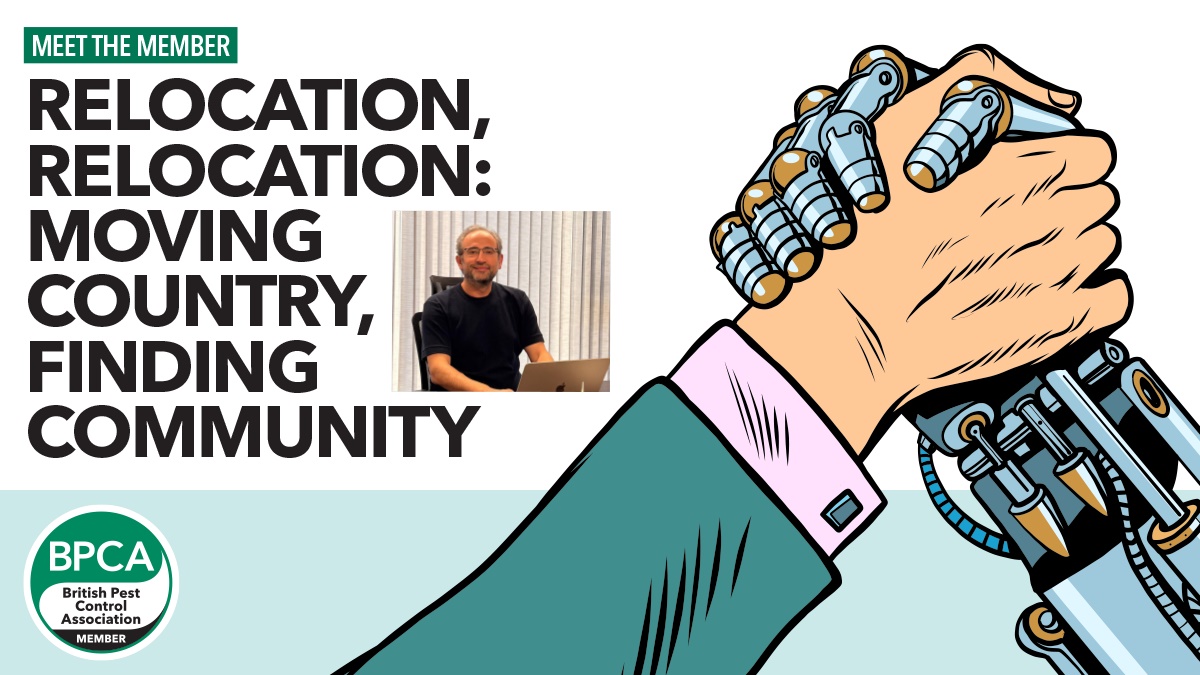
Taylan Karakas is the owner of BPCA Manufacturer and Distributor member, Purean Solutions and Technology, based in Milton Keynes. Purean provides Insectram, a pest management software platform designed around data, reporting and technology.
PPC magazine spoke to Taylan about relocating from Turkey, the importance of a connected sector and what he’s learned from working across pest management sectors in two different countries.
PPC How did you first get into pest management?
TK My father worked for the agricultural department of the Turkish government for about 50 years, dealing with pests. When he retired in 1999, he started a pest control business with my mother, my sister and me.
I was studying chemical engineering at the time. When I moved to another part of Turkey to attend university, I started a second branch of the family business.
Over the next few years, we opened around 20 branches across Turkey and worked with franchisees too. At one point, we had around 350 people in the company.
I was also a technician for 16 years. That experience has been very important to me because I understand the problems technicians face.
PPC Where did the idea for Insectram come from?
TK It came from a very practical problem.
We had lots of technicians and lots of vehicles moving around Turkey. Some technicians were working in hotels, others in food production and others in residential pest management.
We could see where the vehicles were. But we didn't always know what was happening inside the buildings.
Technicians were recording pest activity on paper. They had to remember which monitoring points had activity, whether it was rats, mice or flying insects, and then bring all that information back to the office.
When you have a large number of technicians, that becomes a nightmare.
I wanted to solve that problem for myself. Then I realised it could be useful for other pest management companies too.
PPC How did that lead to your UK business?
TK After graduating from Chemical Engineering at Middle East Technical University, I completed training around British Retail Consortium (BRC) auditing, food, sustainability and quality standards. I started developing the software in 2013. By 2017, we had our first software clients in Turkey.
Then, in 2018, I moved to London and started Purean. We wanted to be close to the expertise around BRC and BPCA.
We wanted to understand the standards and the needs of the market we were working in. We've now been trading in the UK for around eight years.
PPC What was it like establishing the business in the UK?
TK It was interesting! At first, I came on my own to establish the business and see how things would develop. Then the Covid-19 pandemic happened and everything became more difficult.
I went back to Turkey for about two and a half years. At the end of 2023, I came back to the UK, this time with my family. We moved to Milton Keynes and moved the company's head office from London to Milton Keynes too.
I really like being in the Midlands. From Milton Keynes, I can reach our UK clients quite easily. It's a very good location for us.
We have found the business support invaluable. Earlier this year, we were selected by the British Library’s Business and IP Centre (BIPC) to take part in their competitive scale-up programme, Get Ready for Business Growth. Having the backing of such a prestigious UK national institution is a massive milestone not just for us, but a proud recognition for technology innovation within the UK pest management sector.
PPC What does your day-to-day look like at Purean?
TK We don't just provide software. We work closely with our clients and support them in the field. Recently, I was with a client in London setting up the software at one of their sites.We also trained their client because they will be using the system too.
They can see the heat maps and trends, and they can show the information to auditors when they visit.
I like that part of the business because we are close to our clients. We come from the field ourselves, so we understand what technicians and customers need.
And everyone works differently, so being able to understand that and adapt to it is really important.
PPC Why was joining BPCA important to you?
TK I really wanted to be part of the UK pest management community; not just as an observer but an active part of it.
BPCA is an authority for the sector, and I wanted to be close to that expertise. We also wanted to make sure our software could support the standards our customers are working to.
The UK has a very close pest management community. BPCA brings people together through the magazine, online events, PestEx and other activities.
Coming from a place where that community doesn’t exist in the same way, that is something I really appreciate.
PPC Is that a big difference between the UK and Turkey, the community?
TK I think the UK sector is more academic and more connected.
There is an association in Turkey, but I don't think it brings pest controllers together in the same way as BPCA does.
Here, you have exhibitions, digital forums, in-person events and opportunities for people to meet each other. That connection is important.
If people working in the same sector don't have connections with each other, the sector can become fragmented.
People don't know what other companies are doing or what is happening around them. There’s no support system or a way of keeping in the loop. In the UK, I think BPCA helps create that connection.
PPC Is that why you wanted to get involved with BPCA committees?
TK Yes, I wanted to participate.
After coming back to the UK with my family, I wanted to get involved with the Association's committees and activities. I wanted to learn more about what BPCA is doing, but also think about what we can contribute as a technology provider.
I would like to hear the voices of people in the sector, but I also want my voice to be heard. We all have different experience and different expertise.
Insectram is very heavily built around that need to communicate too, so we know that it’s not just about the traditional ways people think of communication that are important.
You can't provide that kind of service properly by sitting in an office and guessing. You have to stay close to the people using the technology and understand what they need.
“I still believe that the technology should help technicians and shouldn't replace their expertise."
PPC You’re really passionate about technology. Are there other ways you’re implementing new technology at the moment?
TK The landscape is evolving very quickly.
With Insectram, we're the first platform to introduce predictive AI insights that simultaneously support operational technician guidance and audit-readiness. The idea is to help the sector move from reactive treatment to proactive prevention.
Right now, we're working with monitoring sensors, electronic fly killer cameras, artificial intelligence cameras and other connected technology. The important thing is that the data comes from the real site and the real technician.
We bring that information together so technicians, clients and auditors can see the bigger picture. Artificial intelligence is now becoming a bigger part of that.
For example, the system can look at historical data and identify patterns that might not be obvious when you're looking at one visit at a time.
I still believe that the technology should help technicians and shouldn't replace their expertise. But we need to utilise it to make us more efficient and better at our jobs.
PPC You have a strong interest in sustainability too. Where did that come from?
TK When I was working in the automotive industry, I learned that you can't look at one part of a business in isolation.
You have to think about the environmental impact, the people you work with and the wider picture.
After returning to the family business, I worked with different quality, food safety, environmental and occupational health and safety standards. When you bring all those things together, you get sustainability.
I also work as a sustainability auditor, doing audits for the Green Globe Foundation in the UK, Turkey and some surrounding countries.
That experience influences how I think about pest management too. For example, it can be about using the right amount of stock, reducing waste and making sure products and equipment are used in the right place.
Even something as simple as where you position an insect light trap can have a sustainability impact.
PPC What do you think the UK sector can learn as pest pressures change?
TK We need to keep collecting good data and listening to what is happening in the field.
With changing weather patterns, pest activity may change too. We may see different levels of activity or changes in where pests are found.
The data we collect through our UK users is already showing us where certain problems are increasing.
That means we all need to be prepared. It isn't only about technicians. Customers need to understand these changes too. We need more knowledge across the whole sector.
PPC What excites you most about the future?
TK My dream is to build a robot technician.
I don't think our technicians will be unhappy about that. I think they will be happy because their expertise would lead the technology.
Imagine a robot walking around a site for 24 hours, taking photographs and videos, finding gaps and crevices, identifying food spillages and collecting information.
It could act like a pre-auditor and give the technician the information they need.
A technician who manages 50 sites today might eventually be able to manage 200 or 500 sites with that technology supporting them.
That's my dream.