PPC124 | MEET THE MEMBER
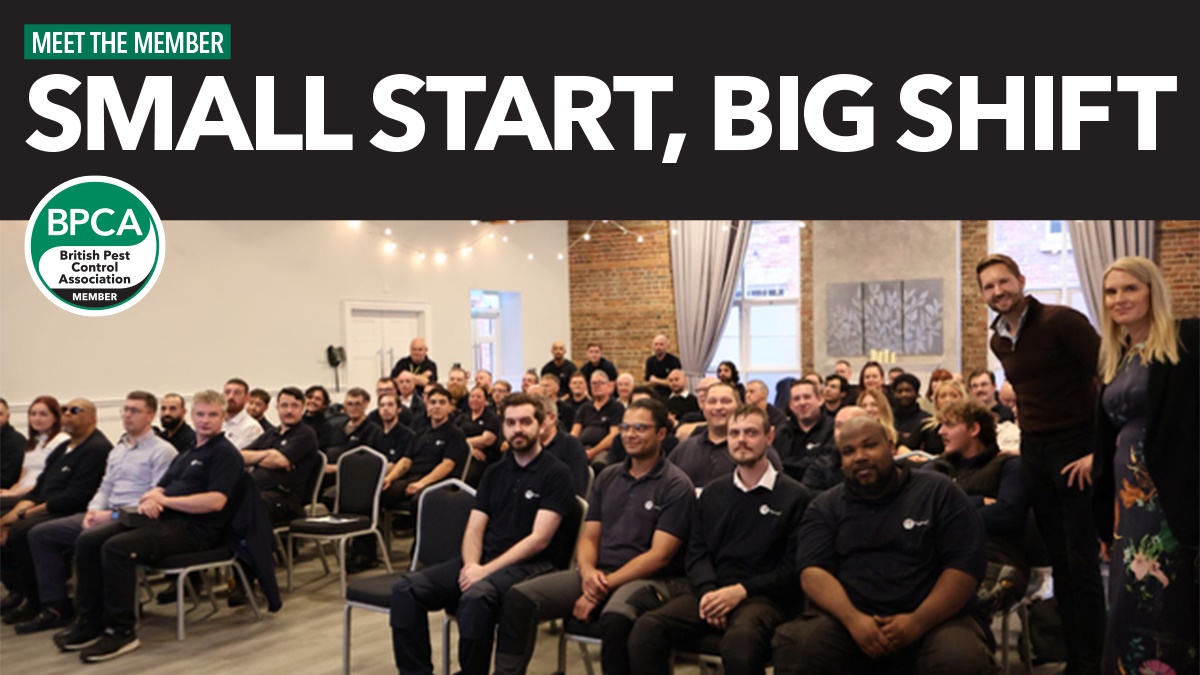
Nightshift started with three people: Harry and John Somner, and Nic Ashford. More than a decade later, the business has around 75 technicians and between 95 and 100 people across the company. The business works mainly in commercial pest management, with a strong presence in hospitality, restaurants, hotels, offices, stadiums and airports.
We caught up with Harry and Charlie to find out more about the people behind the business.
PPC Harry, how did you get into pest management?
HS I completed my Level 2 while working for Enviroguard in between college courses, then went full time as a foot technician covering Zone 1 in central London before heading to university. It was a great way to learn the job from the ground up. Nic started his journey in the industry at the same time, so it's great that we came back together years later to build Nightshift.
After university I spent time in the City working for an insurance broker. That gave me a strong grounding in business, client relationships and risk, which turned out to be ideal preparation for running a pest management company. Setting up Nightshift brought both sides of that experience together.
PPC And when did Nightshift begin?
HS We started in 2013 with three of us: myself, Nic, who is now our general manager, and John. Nic and John both brought strong industry experience, while I added a different skill set from my business and economics degree and my time working in the City.
Abi Richardson, now our business services director, joined about a year later. She'd also come from the City and became a huge part of the operational side of the business, particularly office administration and bid and tender writing.
PPC How has the company changed since those early days?
HS Quite a lot! We started in London and the South East, then gradually expanded as we won work and built up enough density to service new areas properly. We're now working as far north as Manchester and as far west as Bristol and Exeter.
A lot of that growth has come through tenders, but we've also had organic growth from existing customers. Some of our clients have been with us for more than 10 years, and as they've expanded their own operations, they've brought us with them.
PPC What do you think has been the key to that growth?
HS Relationships. Winning work is one thing, but there's no point if you're losing customers at the other end.
We've always focused on delivering exceptional standards and looking after our clients. And if something isn't right, we put it right quickly.
A lot of the people we work with are contacts I've known for more than 10 years.
We don't rely on a big sales team. Abi and I lead on large bids, and our client relationship team handles inbound sales enquiries. Either way, clients are dealing with people who know the business inside out. Some have been with us so long they've become friends.
PPC What sort of customers do you work with?
HS Around 90% of our work is commercial.
We cover luxury hotels and restaurants, offices, stadiums, superstores and airports, including two international airports. We also work in social housing and on government contracts.
One of the things I like about the business is the variety. It's a big draw for our technicians too; no two days are the same.
PPC Is hospitality a particularly important sector for you?
HS Yes. We do a lot of work in hospitality and bed bug management is a significant part of that work. For luxury hotels, the reputational risk is huge, so our approach is largely preventative.
We deliver staff awareness training to hotel teams, led by Nic, and carry out proactive inspections. We use monitoring technology and our Labrador bed bug dogs, Bailey and Edward.
PPC Which areas of pest management does your team specialise in?
HS Inner-city rodent control is a real focus for us, and it's where a lot of our expertise lies. We have more than 40 foot technicians working across central London, so we can respond to issues almost immediately. In busy, high-density environments, that speed of response makes a real difference to our clients.
We know these sites inside out. Restaurants in busy transport hubs and older listed buildings are good examples.
Effective control comes from assessing the site as a whole, combining treatment with proofing and hygiene recommendations, and working closely with the client so responsibilities are clear on both sides. It's work we do every day, and our team is very experienced at it.
PPC Stating the obvious here, but the company is called Nightshift. Is that a key part of your service and is it unique in the industry?
HS It's a big part of what we do.
We wanted the name to reflect that we're a 24/7 operation, and we have a night team working every night. Most of our technicians work at least one night a week.
CC There are other companies that offer night work, but for us it's not an add-on. It's at the core of how we operate and how we schedule our teams.
PPC What are the advantages of working through the night?
HS For hospitality clients, it's a real advantage. We can attend after service has finished, assess hygiene and housekeeping standards, and carry out thorough inspections without any disruption to trade.
Offices are much the same. Clients don't want technicians working around a busy trading floor during the day, but at night we have full access to a quiet building.
CC There are operational benefits too.
Travelling across London is far quicker at night, so our technicians spend less time on the road and more time on site, which means a more efficient service.
PPC Charlie, you've come back into the industry and joined Nightshift. What does your role involve?
CC My role is broad, covering compliance, health and safety, auditing and technical support. I started in the industry as a technician in 2008 and later worked as a TAS auditor working with many BPCA members, before joining Nightshift in 2025 after a period working overseas.
Along with the compliance side, I still get involved in servicing and fieldwork, and I've been leading on our training and continuing professional development (CPD) programme.
PPC What does the training programme actually look like?
CC We've put together a five-week in-house induction programme for new starters. It's designed to give people a solid baseline before they move on to their Level 2 qualification, and it includes the safe use of rodenticides.
Trainees shadow experienced technicians until they're fully competent and qualified. We're trying to give people a proper foundation rather than just putting them straight out on the road.
We've also had a lot of technicians progress onto the Technical Inspector course. We have a big emphasis on professional development. It’s important for recruitment because new staff know that we’ll invest in them. Same goes for retention of current staff.
It’s also key when working with clients, because they know that they’re getting highly-trained, competent technicians working on their sites.
“We're trying to give people a proper foundation rather than just putting them straight out on the road.”
PPC How important is CPD to the business?
CC Very important. We have monthly team meetings and toolbox talks, and we keep our training records up to date. Everyone has already earned more than 20 CPD points this year, so there's a lot happening.
We also make good use of BPCA's online webinars. They're a valuable resource and an efficient way to keep everyone's knowledge current without taking the whole team off the road.
HS We won the Commitment to Training Award a couple of years ago, and that commitment hasn't changed. Training remains central to how we operate.
PPC Has growth brought challenges?
HS We've roughly doubled in size over the last two to three years, but we've grown in a planned, structured way. We've invested in our people, our training and our systems so the business is set up to support that growth.
Recruitment is an important part of that. We bring in a balance of experienced technicians and trainees, and our reputation helps a great deal.
We're well established, particularly in hospitality, and we're regularly invited to tender for work with prestigious establishments. That's a real draw for technicians, because people want to work on interesting, high-profile sites.
PPC Charlie, you've also been looking at the systems technicians use. Why?
CC We want to make things simpler. I've been bringing our health and safety documentation together into our service system, so technicians have what they need in one place.
We're also moving quality assurance reporting into the same system. The aim is to streamline things.
Technicians are busy enough when they're out on site. They don't need to spend ages trying to find the right document or information.
PPC What's next for Nightshift?
HS Being part of the Tyro Group for nearly four years has been a real catalyst for us. It's given us the backing and resources to accelerate our growth, while keeping the identity and service culture that makes Nightshift what it is. In that time, Multipest and Pest Tech have been integrated into Nightshift.
We're on an exciting growth strategy and there could be further integrations in the future. But the main thing is continuing to deliver quality, look after our clients and support our technicians. There's no point growing if you lose sight of those things.
PPC Finally, what advice would you give another pest management business looking to grow?
HS Understand your clients' needs. Don't just apply a blanket service. A restaurant has very different operational requirements from an office or another type of commercial site.
You need to understand how the customer works and develop a service that fits. Be agile. Be flexible. Build good relationships.
CC Keep on top of your training and CPD, no matter how experienced you are.