STAFF BLOG
Niall Gallagher, BPCA Technical Manager, looks at the Climate Change Committee’s latest assessment of UK climate risk, and explains why pest professionals have a bigger role in adaptation than many people might realise.
The latest report from the Climate Change Committee is not exactly a light read. It is called A Well-Adapted UK: The Fourth Independent Assessment of UK Climate Risk, which is the sort of title that makes you think, “I’ll just pop the kettle on first.” Possibly twice.
I’ve read it all (so you don’t have to), and in short, the UK is changing. Our climate is changing. And the pests we deal with are not going to sit politely in the corner and wait for us to catch up.
We’re part of the public health picture
Pest management doesn’t just sit in one industry doing one neat, tidy thing.
We’re in hospitals, care homes, prisons, schools, food factories, takeaways, farms, warehouses, sewers, waste sites and people’s homes.
I used to say we worked from farm to fork, but that doesn’t really go far enough. We’re there before the seed is in the ground, and we’re there after the waste has been put in the bin.
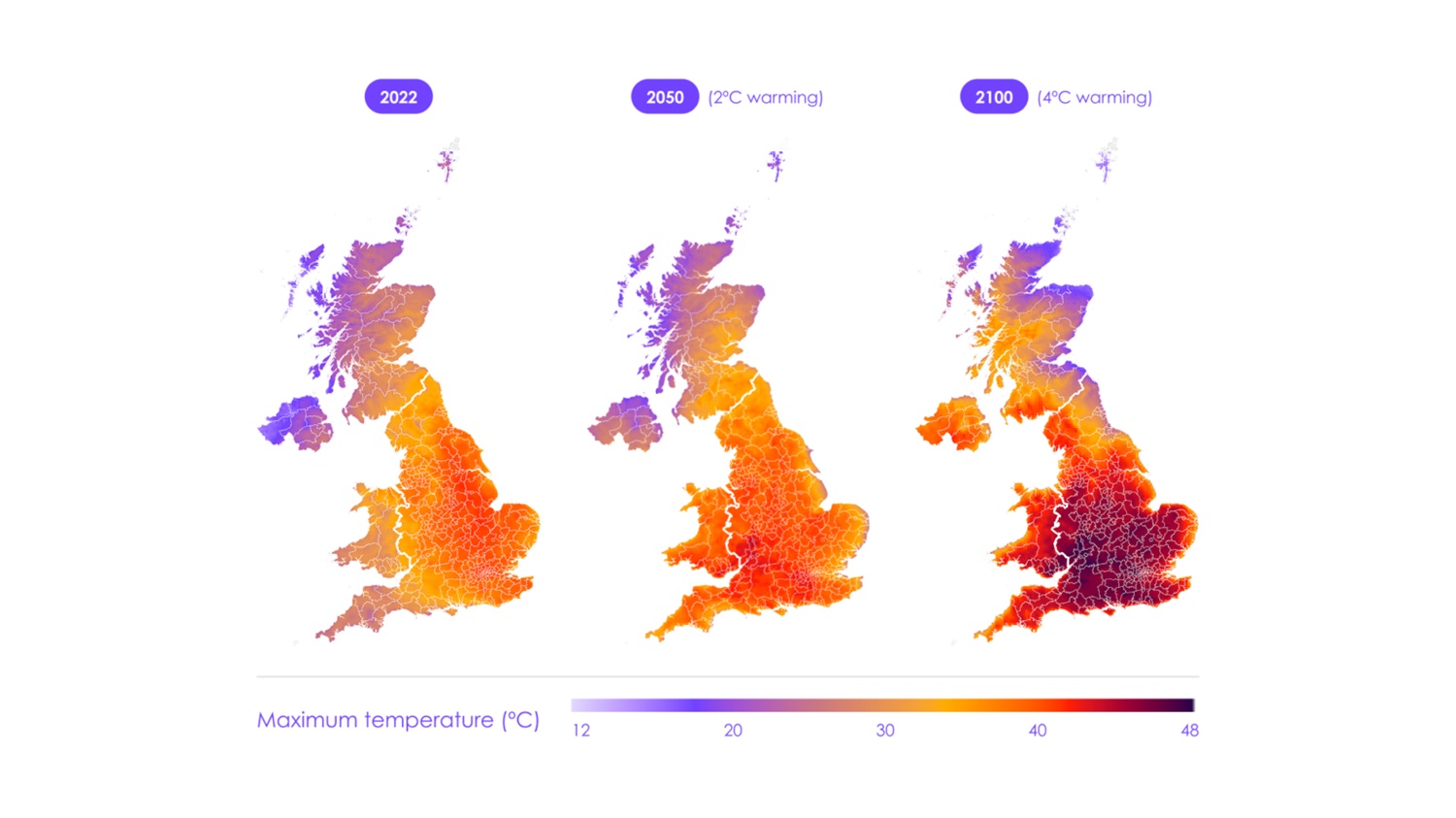
Recent and projected maximum temperatures. Extreme heat is projected to become more widespread and severe across the UK as global temperatures rise, especially in southern and central England. Under 4°C global warming level by 2100, much larger areas reach temperatures above 40°C. Credit: A Well-Adapted UK - The Fourth Independent Assessment of UK Climate Risk (CCRA4-IA).
The report discusses climate risk across health, food security, infrastructure, water, waste, and the built environment - pest management touches all of that.
This is where the One Health approach comes in. That means recognising that human health, animal health, plant health, ecosystem health and planetary health are all connected.
It sounds a bit World Health Organisation-y, but in short (to me at least) “One Health” means that if one part of that system is out of line, everything else starts wobbling. Pests are great at exploiting a wobble.
My top five report takeaways
- The UK is not ready for the climate risks it already faces - Heat, flooding, drought and infrastructure disruption are no longer future problems - they’re already happening
- Heat is becoming a serious public health issue - More frequent and intense heatwaves will affect vulnerable people, especially in homes, hospitals and care settings
- Flooding, damp and drainage issues will increase pest pressure - Wetter winters, flash flooding and overwhelmed drainage systems can all create conditions for pest activity
- Food, water and waste systems are under growing pressure - Climate disruption can affect food supply chains, storage, farming, waste handling and water availability
- Adaptation - This is not just about reducing emissions - it’s about preparing for different working environments.
New conditions mean new pest pressures
Warmer temperatures, wetter winters, drier summers, flooding, drought and heatwaves all affect pest behaviour.
Some pests may breed faster. Some may survive in places where they previously struggled. Some species that were historically more of a “not here yet” issue could become more realistic risks.
We already talk about invasive species, but climate change adds a new layer to that conversation.
Aedes and Anopheles Mosquitoes, Red imported fire ants among other invasive pests would be a serious problem if they established here alongside the risk of termites would raise all sorts of questions for housing stock, especially where timber is used more widely.
But as pest professionals living in 2026, what can we do? Be prepared. Survey, identify, monitor, manage the environment, proof, treat where needed and keep reviewing. In other words, integrated pest management. Actually, One Health is a bit like “integrated everything management”, and we can be a big part of that.
Food security is not someone else’s problem
The report also talks about food security. That should make pest professionals sit up.
We play a role in protecting food at almost every stage: crops, storage, processing, distribution, retail, hospitality and homes.
If higher average temperatures increase stored-product insect (SPI) pressure, it means a greater risk of food loss and contamination. If a 20kg bag of rice ends up with rice weevil in it, that food is not going where it was meant to go. Now scale that up to warehouses, supermarkets and food manufacturers.
At the same time, our toolkit is under pressure. Chemical controls are more restricted, and fumigants are already highly regulated. That means good pest management becomes even more important.
Businesses need to think ahead
If extreme heat becomes more common, what does that mean for technicians working outdoors, in roof spaces, plant rooms or hot commercial kitchens?
Policy makers are already exploring the possibility of maximum working temperatures and changes to working practices in some sectors.
That could affect scheduling, risk assessments, PPE, staff welfare and how quickly certain jobs can be completed.
This is not just about polar bears and melting ice caps. It’s about whether a technician can safely climb into a loft in July without turning into a slow-cooked ham.
Small changes still matter
No one is asking every pest management business to change its whole fleet overnight. Vans are expensive. Times are tough. And depending on who you ask, electric vehicles are either the future or a PestEx argument waiting to happen.
But there are practical steps we can all look at:
- Use chemicals correctly - don’t overapply
- Plan routes properly
- Think about whether every bit of kit needs to be in the van every day.
We’ve all seen vans where opening the back doors is less “stock check” and more “controlled avalanche”.
Reducing weight, planning stock and making visits more efficient can save fuel, time and probably someone’s ankle.
We can also ask more of our manufacturers to improve sustainability, whether that’s using recycled plastics in bait boxes, improving packaging, or designing products with environmental impact in mind.
Adaptation needs pest professionals
The big message from the report is that adaptation cannot wait. I’d add that pest management needs to be part of that adaptation.
We protect public health. Not personal health. Public health. That means what we do affects more than one person, one building or one customer.
As the climate changes, pest professionals will need to keep learning, keep adapting and keep explaining our value. Because when systems are under pressure, pests usually find the gaps first.
And if there’s one thing our sector understands, it’s finding the gaps.
SHARE YOUR THOUGHTS
How is your company preparing for the future? Send us your thoughts at hello@bpca.org.uk