EUROPEAN PEST MANAGEMENT
CEPA has reported a busy year of advocacy, professionalisation and international work, with 2025 marking the European association’s 50th anniversary.
The organisation’s 2025 Activity Report sets out work across regulation, training, certification, sustainability, and communications, with a strong focus on defending the role of professional pest management in public health and environmental protection.
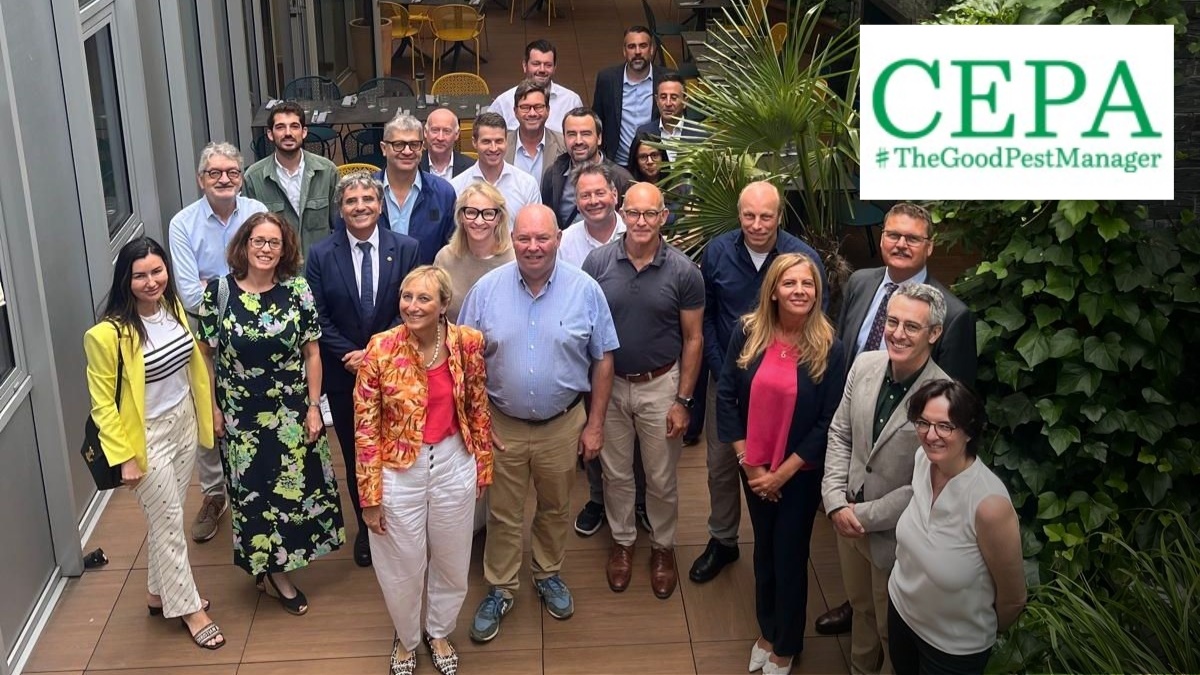
For BPCA members, the update is a useful reminder that many of the issues facing UK pest management are also being debated across Europe. Product availability, professional standards, sustainability, invasive species and evidence-led regulation are not isolated national challenges.
Protecting the pest management toolbox
A major focus for CEPA in 2025 was the ongoing review and restriction of active substances under the EU Biocidal Products Regulation.
CEPA continued to advocate for a balanced, risk-based approach to regulation, particularly around anticoagulant rodenticides and other essential biocidal products.
The association represented the pest management sector at the European Commission’s Implementation Dialogue on biocides with Commissioner Várhelyi in July 2025.
This gave CEPA the opportunity to highlight barriers to product access, discuss innovation and explain why professional pest management needs a full, effective and properly regulated toolbox.
CEPA also engaged with DG SANTE, the European Chemicals Agency and the Biocidal Products Committee on issues including AVK rodenticides, PT18 products, imidacloprid, tebuconazole, sulfuryl fluoride and emerging issues such as PFAS restrictions.
Professional standards and training
CEPA Certified continued to grow in 2025, with more than 840 companies certified under the scheme.
The certification scheme remains one of CEPA’s main tools for supporting professionalisation and harmonising pest management standards across Europe.
CEPA also continued work on the IPM Academy, an online training platform designed to support multilingual training aligned with European standards.
The Activity Report also notes progress on IPM Guidelines, the European Bedbugs Survey, the Mice Survey and the development of a content validation model for external training.
Sustainability and global visibility
CEPA launched a new Sustainability Working Group in 2025, tasked with developing a European Sustainability Charter for the pest management sector, preparing a sector sustainability report and creating tools to help businesses improve their environmental footprint.
The organisation also continued its work with the Global Pest Management Coalition (of which BPCA is a member), supporting international coordination between pest management associations.
CEPA’s 50th anniversary was marked at the Parc Floral de Paris during Parasitec, including the launch of a new institutional video and a European conference on the future of pest management.
2026 work programme
CEPA’s 2026 AGM took place in Paris on 16 June, where members reviewed the 2025 activity report, annual accounts and the organisation’s 2026 work programme.
The agenda included elections to the Board of Directors, updates on advocacy priorities and further work through CEPA’s National Association Forum, Issue Management Committee, Scientific Committee, Sustainability Committee and Communication Committee.
BPCA is a National Association member of CEPA.
We look forward to working with CEPA on its 2026 work programme, including coordinated lobbying to protect the pest management toolkit, influencing the BPR refit exercise, reinforcing CEPA certification and sharing national experience and learning across the sector.
Rosina Robson, BPCA Chief Executive
BPCA will continue to monitor CEPA’s work and share relevant updates with members where European developments may affect professional pest management in the UK.