ECONOMY
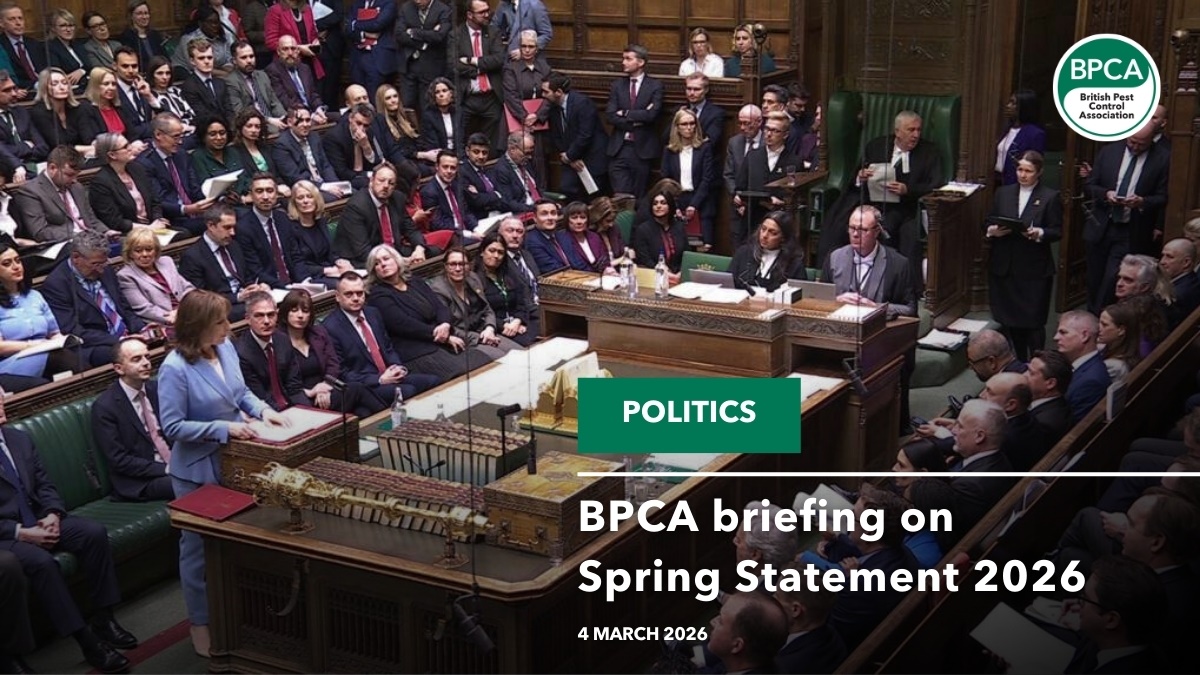
The UK Government has delivered its 2026 Spring Statement, setting out updated economic forecasts but announcing no new tax or spending policies. Instead, Chancellor Rachel Reeves used the statement to confirm previously announced measures and outline the Government’s latest view of the economy ahead of the next major fiscal event in the autumn.
BPCA Chief Executive, Rosina Robson, shares her takeaways from the Statement and analyses where policy might affect the pest management sector.
SPEED READ
- The Spring Statement mainly updated economic forecasts and included no new tax or spending policies
- Previously announced measures were confirmed, including National Living Wage increases and £150 off energy bills
- Household spending power is expected to grow slowly between 2026 and 2030
- Global tensions could push up fuel and energy prices, which may change the outlook later this year
- Government debt remains high, and a 2027 Spending Review could affect funding for areas like skills.
For pest management businesses, the announcement offers short-term policy stability, but it also highlights ongoing pressures on costs, household spending and future public sector funding.
No new taxes or policy changes
The Spring Statement was primarily an update on the economic outlook rather than a platform for new announcements.
The Government has committed to holding just one major fiscal event each year, meaning significant tax and spending decisions will now be reserved for the annual Budget in the autumn.
This approach is intended to give businesses more certainty when planning investment and hiring.
The statement largely confirmed policies that had already been announced, including increases to the National Living Wage and £150 off household energy bills.
Household spending expected to grow slowly
For service sectors like pest management, household spending power remains an important factor.
Real household disposable income is expected to grow gradually between 2026 and 2030, increasing by around 0.6% to 0.9% each year over that period.
While modest, this growth could support customer spending on services such as pest management over the longer term.
Energy prices and global events still a risk
The forecasts published alongside the statement do not fully account for recent tensions in the Middle East.
Rising energy prices linked to global instability could increase costs for businesses and push inflation higher again before the Autumn Statement later this year.
Higher fuel and energy costs would directly affect pest management companies that rely on vehicles, equipment and temperature-controlled storage.
Government debt still high
Although government borrowing has fallen, national debt remains high and the Government has confirmed its aim to reduce debt over the next five years.
This means pressure will remain on public spending.
A further departmental Spending Review is scheduled for 2027, which will determine funding for government departments and programmes.
This process could affect areas such as apprenticeships, training funding and local authority budgets, all of which are important for the pest management sector.
BPCA response
Rosina Robson, Chief Executive of BPCA, said:
“The Spring Statement was mainly about confirming the Government’s economic outlook rather than introducing new policies. For businesses like pest management companies, that stability is helpful in the short term.
“However, our sector will still be watching closely as future spending decisions are made. Funding for skills and local services all play a role in supporting professional pest management and protecting public health.”
BPCA will continue to monitor upcoming economic announcements and engage with government where decisions could affect pest management businesses and the wider sector.