PPC123 | OPINION
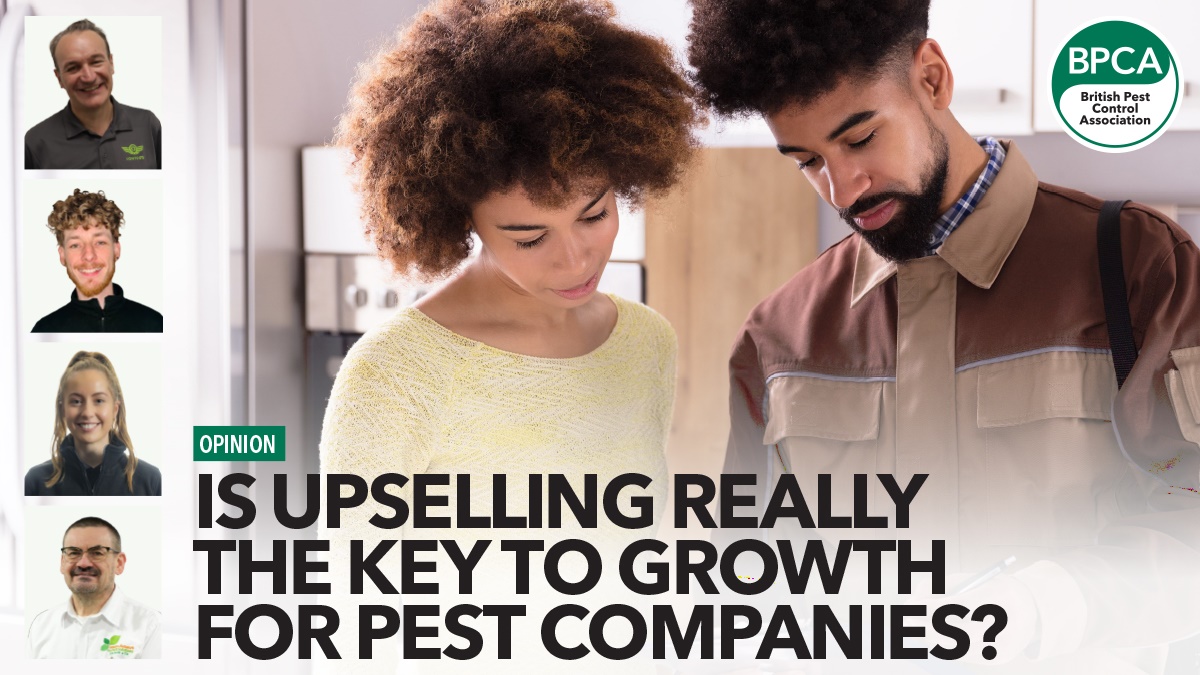
PC | Paul Cooper | London Network for Pest Solutions
GS | Gemma Sutherland | Pest Solutions
SDN | Shane-Daniel North | Eradikil Pest Control
RC | Rob Curston | Contego
Upselling without selling
PPC Upselling can feel like a dirty word in pest control. There’s a fear it means pushing unnecessary services or pressuring customers. Did any of you actually set out to upsell?
GS No, not really. We didn’t sit down and decide to upsell. For us, pest awareness training came from wanting to deliver better customer service. We’d often see repeat issues where customers didn’t fully understand why problems kept coming back. So we focused on education.
If you can recognise where a customer needs support and offer something genuinely helpful, that’s just good service. If that also generates revenue, then that’s a positive outcome rather than the main driver.
PC I’d agree with that. Upselling wasn’t something we targeted. It evolved out of frustration, really. We were doing a lot of domestic work, housing association work and local authority contracts, and we kept seeing the same infestations returning.
Block control works, but it doesn’t always fix individual properties. Proofing became the missing piece. We didn’t choose it in a strategic sense. It chose us because it solved a real problem.
SDN Ours was similar, but very practical. We were already in lofts dealing with rodents. Insulation would be destroyed, contaminated or removed. We’d leave, and customers would still have a problem, just a different one. Cold houses, draughts, unhappy families.
Learning how to replace insulation properly just made sense. From there, customers asked about boarding, shelving and ladders. We were already trusted, already on site, so it was a natural progression.
RC If you take a root cause approach seriously, additional services often follow automatically. If you understand why pests are present, you start looking at proofing, drainage, environmental management and structural issues. That isn’t upselling for the sake of it. It’s problem-solving.
Proofing as a growth engine
PPC Paul, you mentioned proofing has had a major impact on your business. Can you talk us through that?
PC We started doing pest proofing properly around 2022. Since then, we’ve averaged around 600 to 700 proofing jobs a year. The average job value is between £500 and £600.
If you do the maths, that’s over £1 million in additional income over a relatively short period. That’s significant for any business.
What’s important to say is that proofing hasn’t replaced pest control. We couldn’t do one without the other. Pest control remains the core service. But proofing has changed our income mix and, just as importantly, how clients perceive us.
We’re seen as more professional, more thorough and more solution-focused.
PPC Has that required big changes internally?
PC Yes and no. We had to train people properly, invest in skills and make sure work was done to a high standard. But culturally, it aligned with what we already believed in: fixing problems properly rather than repeatedly treating symptoms.
Education as a service
PPC Gemma, pest awareness training feels quite different to physical services like proofing. What impact has it had?
GS It’s had a big impact, particularly on relationships. When customers understand what’s going on, they’re far more likely to engage with recommendations. That might be proofing, housekeeping changes or access issues.
It’s also reduced frustration for technicians. There’s nothing worse than repeatedly flagging the same risks and seeing nothing change. Pest awareness sessions allow those conversations to happen at a higher level within organisations.
Internally, it’s been positive too. Team members are developing presentation skills, confidence and a deeper understanding of client environments. That’s helped us expand into sites with stricter audit requirements, where educati
Fewer customers, stronger relationships
PPC Shane, your business has pivoted quite heavily into additional services alongside pest control. What’s that changed day to day?
SDN The biggest change is fewer customers, more value. I’m not chasing as many new leads because I’m doing more work per client. I’m already on site, already trusted, already selling to someone who knows me. That saves time and reduces marketing costs. It also gives us flexibility. If rodent work drops off seasonally, we can pivot to insulation or proofing work instead of sitting idle.
It’s not about squeezing customers. It’s about offering things that genuinely make sense in the context of the work you’re already doing.
RC That’s key. Once a client trusts you in one area, they’re much more likely to use you elsewhere. We’ve seen that particularly with larger commercial clients who want fewer suppliers, not more.
“It’s not about squeezing customers. It’s about offering things that genuinely make sense in the context of the work you’re already doing.”
Handling pushback and knowing when to stop
PPC A question that came up repeatedly was about difficult customers. At what point do you cut your losses when someone won’t act on advice but keeps complaining?
SDN There’s a limit to what you can do. You can either explain that you can’t progress until key issues are addressed, or you offer to do the work for them at a price. Some customers are too busy or don’t want the hassle. If you can solve it for them, great. If not, sometimes a third-party referral is the right answer. You can’t take responsibility for things outside your control.
GS Communication is everything. Difficult customers can become good customers if trust is built. But that trust comes from being consistent, clear and honest.
If recommendations are framed as help rather than sales, they land very differently. Customers don’t like being sold to, but they do like problems being solved.
Does upselling ever go too far?
PPC There’s a concern that adding services can dilute focus. Has anyone experienced that?
PC Only if you forget what your core business is. Pest control has to remain central. If standards slip there, everything else falls apart.
RC Additional services only work if they’re relevant. If they don’t genuinely help the client, they won’t stick and they’ll damage trust.
SDN I’d add that you don’t have to do everything yourself. Outsourcing or partnering is sometimes the smartest move.
Final thoughts
PPC If someone reading this is thinking about adding services but feels unsure, what’s your advice?
GS Focus on helping, not selling.
PC Look at what you already see every day on site. The opportunities are usually right there.
SDN Invest in skills or outsource what you don’t understand.
RC Ask better questions. Good conversations lead to better work.
Upselling, when done properly, isn’t about pushing extras. As this panel shows, it’s about fixing problems properly, building trust and creating more resilient pest control businesses.