PPC123 | DEBATE
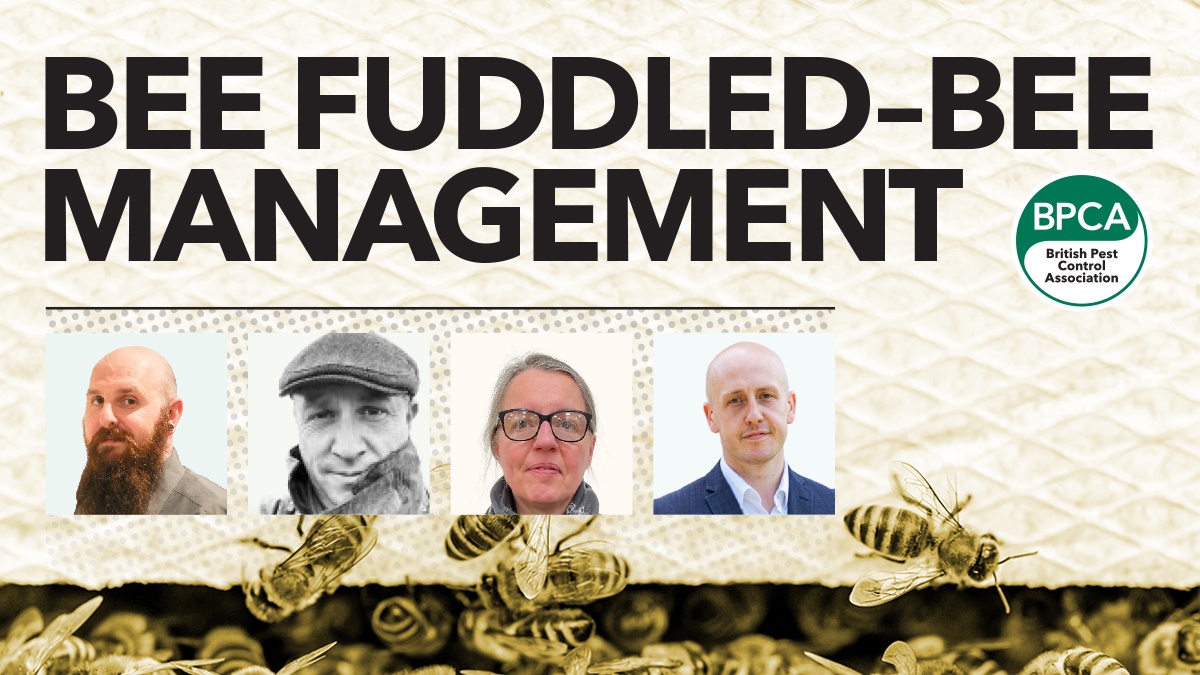
NG | Niall Gallagher | BPCA Technical Manager (host)
CS | Clive Stewart | Westart Apiaries, co-founder UK Bee Removers (UKBR)
DD | Diane Drinkwater | British Beekeepers Association (BBKA)
ST | Sam Thorpe | Predator Pest Solutions
Balancing public health and pollinator protection
NG How do we square public safety with saving bees?
CS Education first. Most callers simply don’t understand what they’re seeing. Calm the situation, explain the insect’s behaviour and nine times out of ten, the panic subsides and we can discuss options rationally.
DD Our BBKA swarm-line operators have the same problem: every flying insect is “a bee or a wasp”. Reassurance – not insecticide – is usually the answer.
ST Being able to say, “Actually, these pollinators can stay” demonstrates professional green credentials and builds long-term trust. Turning down an unnecessary treatment today often wins a bigger maintenance contract tomorrow.
Swarm calls, triage and public education
DD The secret is a robust triage script. First: honey, bumble or solitary? Second: is the swarm accessible? Third: does it genuinely need moving? We remind householders that most nests finish naturally by September.
ST A reliable ID network is gold dust. If I’m unsure, I ping a photo to Diane or Clive rather than guess. The public’s confused; we can’t be.
CS One leisure complex had a hive three storeys up. We put up an information board and left the bees. Diners loved it – free wildlife show, zero risk, zero chemicals.
Bee colonies in buildings – listed headaches
NG Listed façades add a layer of red tape. Tips?
DD Phone a conservation specialist before you lift a finger. We steer BBKA members away from structural jobs entirely – the insurance won’t cover cutting into fabric.
CS Communication is key – engage conservation officers early, record the safety rationale, and get it in writing. Public health can outweigh listed status, but you must show it.
ST Know your limits. We’re CHAS-accredited and still bring in scaffolders or another BPCA firm for Grade II* jobs. One mistake can bankrupt a business.
Training, insurance and the quarantine question
NG What’s the first step for a technician who wants to offer swarm work?
DD Join your local beekeeping association and shadow an experienced collector. Always wait until dusk before lifting the box – or you’ll get a ‘second swarm’ call the next day.
CS Pest controllers must check their own PI/PL policies. Standard cover often excludes livestock removal. BBKA insurance is public liability for volunteer beekeepers – it’s void the moment
you charge.
ST We pair every new bee tech with a mentor and insist on Cat B asbestos awareness.
DD And quarantine. Every swarm – cut-out or free-flying – goes into an isolation apiary for disease checks. With tropilaelaps edging west, we can’t take risks.
Hidden hazards: asbestos, heights and honey seepage
ST Every invasive job starts with a structural survey. Bee flights can reach 10m and cross several ceilings. If there’s any asbestos risk, we stop and test – a delay is better than exposure.
CS Cat B training is the minimum. If you aren’t certified, step back and use someone who is. At height, hire a cherry picker, not a bigger ladder.
NG And remember the aftermath: kill a mature colony with insecticide and you inherit fermented honey, wax moth, carpet damage and the world’s stickiest insurance claim.
Can every feral colony be moved – and should it?
DD If it’s simply clustering on a branch, yes – textbook swarm collection. Inside masonry is different: beekeepers shouldn’t touch fabric, and BBKA cover forbids power tools.
CS The question is cost-benefit. Sometimes fencing off and educating is kinder to bees and wallets.
ST We refuse chemical knock-downs. They rarely work, violate the spirit of pollinator stewardship and usually result in a second call-out when the entrance powder fails.
NG As a sector we need to normalise that stance: no to pesticides, yes to professional removal or toleration.
Costs, complaints and customer persuasion
ST Some clients flinch at a four-figure quote. I frame it as an investment – relocate the colony, gain positive PR, and avoid honey damage. Most boards sign off once they see that.
CS There are ways to trim the bill – client arranges scaffold, builder opens and reseals voids – but never undersell the bee work itself. It’s a specialist trade.
DD Also sell the risk: untreated colonies can throw cast swarms all summer, spreading European foulbrood or varroa bombs across the postcode.
Final take-aways
DD Forge relationships. If you won’t keep the bees yourself, line up a trustworthy beekeeper with a quarantine apiary before the season starts.
ST Build a framework – BBKA for entomology, UKBR for removal methods, BPCA for safety and legislation. Add a mentor and you’ll learn twice as fast.
CS Education! The more you can explain – species, disease, legislation – the less resistance you’ll meet.
NG And if you’re serious about driving standards, join BPCA’s Bee Wise special-interest group. bpca.org.uk/committees-and-groups