GUIDANCE
Bee disease is one of those risks that can quietly sit in the background of a job until it suddenly becomes very real. For pest professionals involved in bee removals, understanding disease risk, spotting the signs and knowing what to do next is essential.
This guidance sets out a practical approach to managing bee disease risk before, during and after removal work. It focuses on awareness, biosecurity and clear procedures so you can work confidently while protecting both honeybee populations and your own reputation. We all have a legal responsibility to report suspicions of notifiable disease, as per The Bee Diseases and Pests Control (England) Order 2006.
SPEED READ:
- Always assume disease risk and check BeeBase before starting work, and record findings in your risk assessment
- Be competent in identifying EFB and AFB and keep training up to date
- Maintain strict biosecurity with PPE, cleaning and clear records between every job
- If disease is suspected, stop work, restrict movement and contact the Bee Inspector immediately
- Use quarantine apiaries properly, with full traceability and at least two brood cycles before reintroduction.
Once you’ve finished reading this guidance, you can take the Bee disease awareness and biosecurity CPD quiz (login required).
Understanding disease risk
Before any work starts, you should assume that disease could be present. The absence of records does not mean the absence of disease.
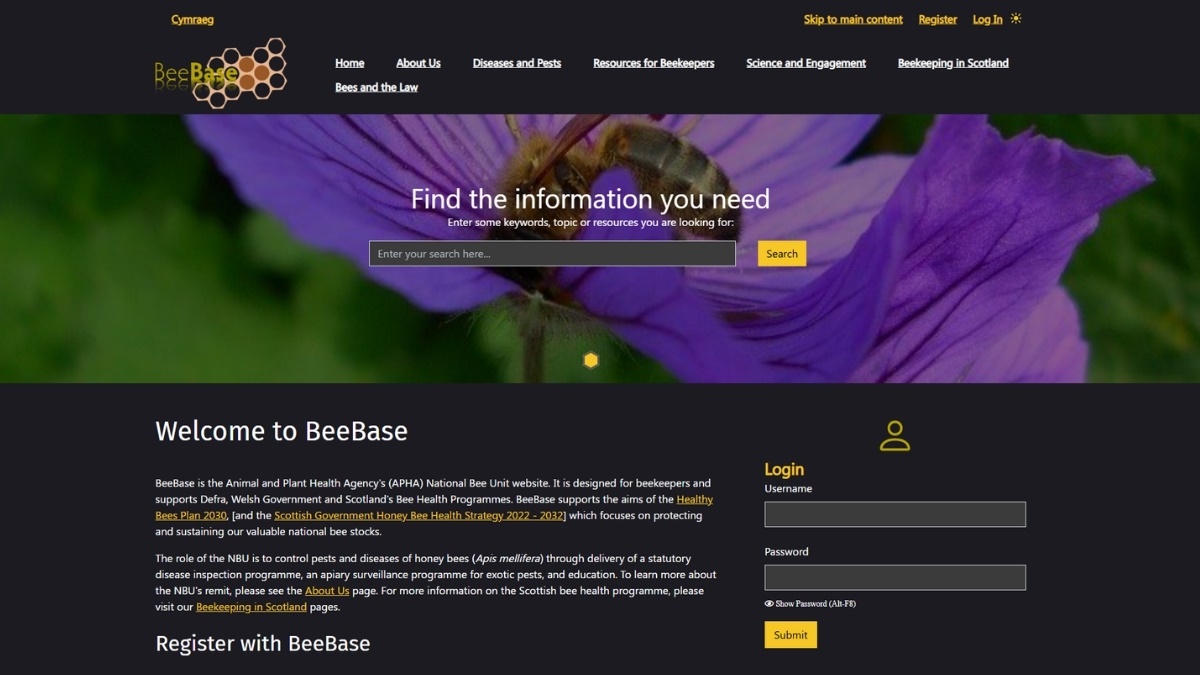
nationalbeeunit.com
A good starting point is to check BeeBase for known disease incidents in the local area. This helps build a picture of risk and should be part of your standard survey process.
You should:
- Review BeeBase data for current and previous years
- Note any history of European foulbrood (EFB) or American foulbrood (AFB)
- Record findings within your environmental risk assessment or survey.
This information helps shape your approach on-site. It also demonstrates due diligence if your decisions are ever questioned.
Competency and training
Recognising bee disease is not optional. If you are removing bees, you are expected to have a working knowledge of the main diseases, particularly EFB and AFB.
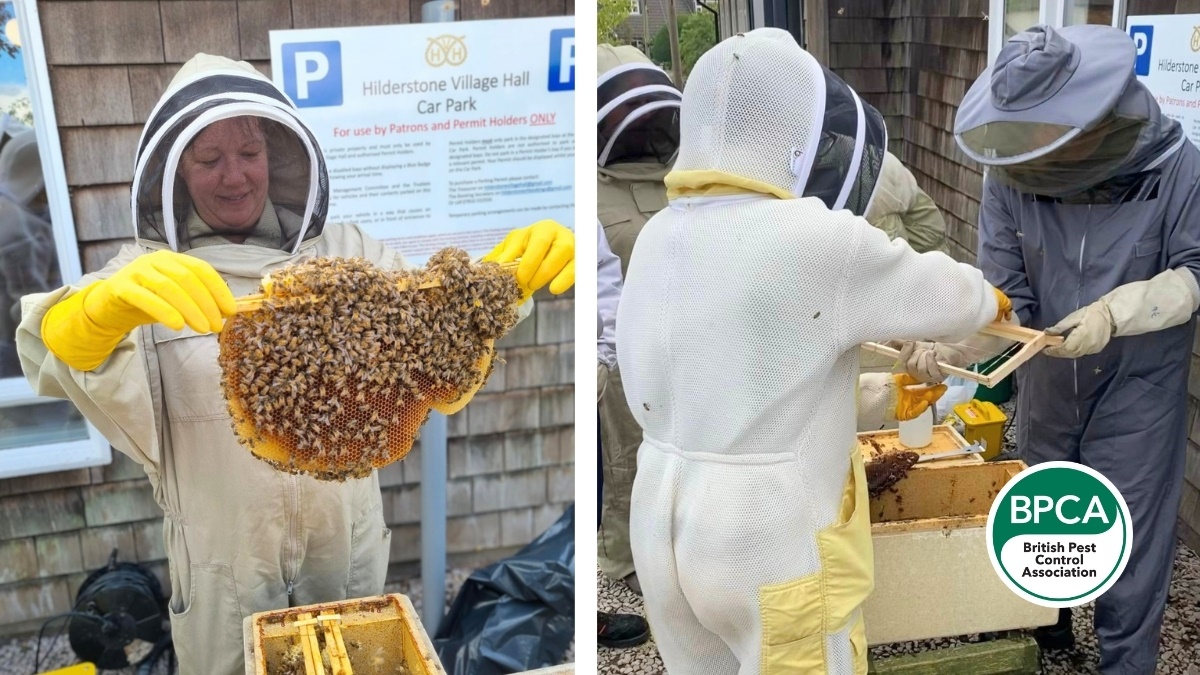
Competency can be built through:
Training should not be a one-off exercise. Refresher learning is important, especially as disease patterns and guidance evolve. Keep records of your training as part of your CPD.
Having the right contacts
If you suspect disease, you need to act quickly. That means having the right contact details to hand.
You should always have:
Do not rely on searching for these details in the moment. Keep them saved and easily accessible.
Managing expectations with clients
Bee removals are not just technical jobs. They involve managing customer expectations, especially where disease risk is involved.
Your risk assessment should include the possibility of disease. However, you should also make it clear that:
- A lack of recorded disease does not guarantee a clean colony
- Additional steps may be required if disease is suspected or confirmed
- Removal may be more complex than initially expected.
Building disease awareness into your conversations helps avoid disputes later and reinforces your professionalism.
Identifying disease on site
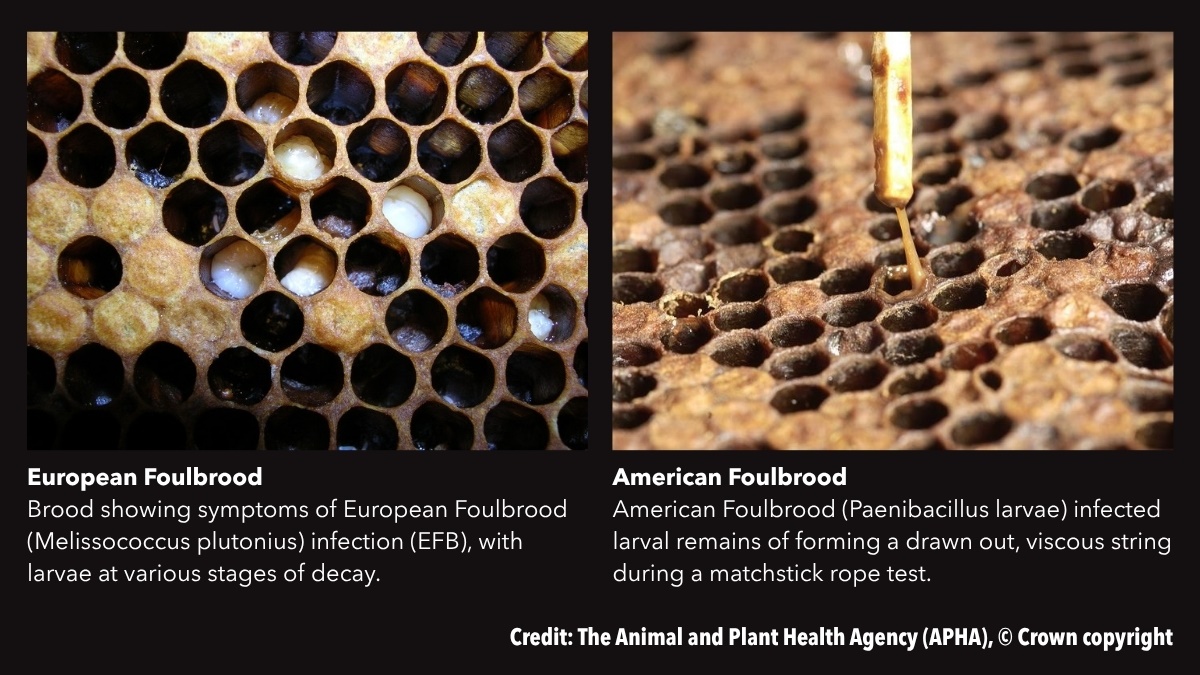
You should have access to reliable identification resources at all times.
| Resource |
Author |
Version/Date |
Size |
|
| Foulbrood Disease of Honey Bees and other common brood disorders (pdf) |
The National Bee Unit |
2017 |
1,971 Kb |
Download |
| Mobile apps or online guidance (web) |
The National Bee Unit |
|
|
View |
These resources are particularly useful when you need to sense-check what you are seeing on site.
Biosecurity in practice
Biosecurity is where good intentions either hold up or fall apart. Poor hygiene between jobs can spread disease and undermine your work.
PPE and equipment
Where possible:
- Use disposable PPE such as nitrile gauntlets
- Avoid porous materials like leather where contamination is harder to manage
- Use separate suits for apiary work and removals.
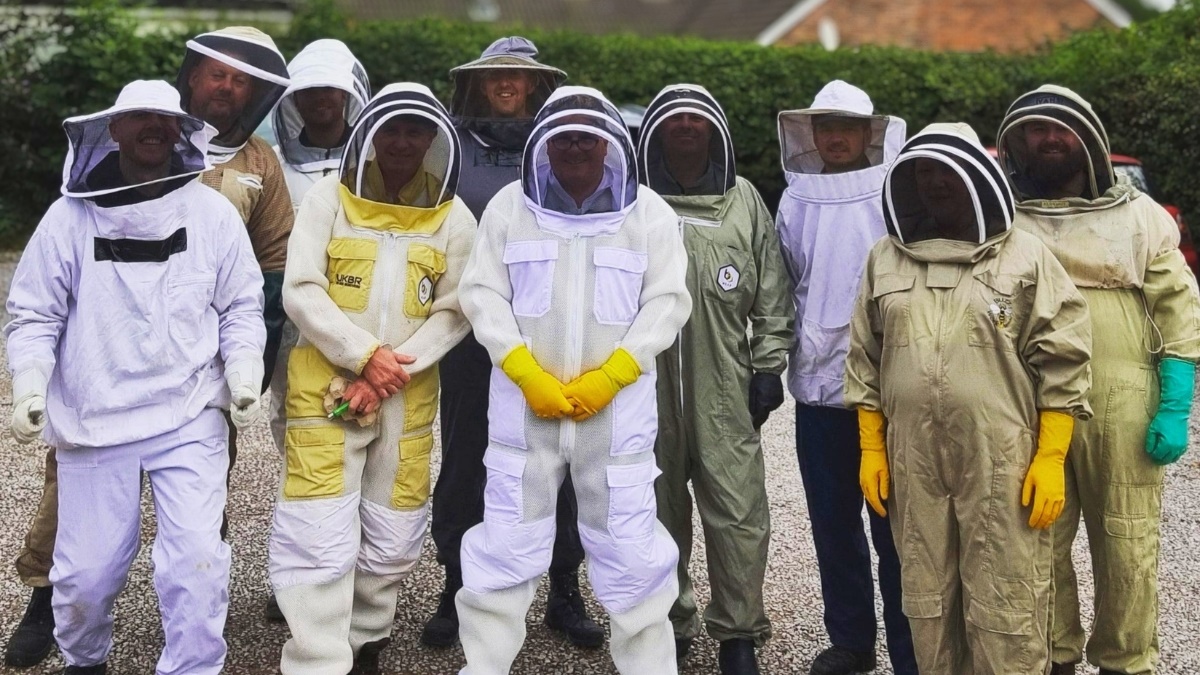
If separate PPE is not practical, then thorough cleaning between jobs is essential. Contaminated items should be double-bagged before washing.
Non-reusable materials should be disposed of appropriately, with incineration considered where necessary and legal.
Cleaning procedures
You should have a cleaning solution available on site.
A commonly used mix for tools is:
- 150ml bleach (containing sodium hypochlorite at 4.5g per 100g)
- 4.5 litres of water
- 1kg washing soda.
For boot disinfection:
- 150ml bleach
- 4.5 litres of water.
Always ensure compliance with COSHH requirements and use suitable alternatives where guidance changes.
Record keeping
Biosecurity measures should not just be done; they should be recorded.
Document:
- Cleaning procedures used
- PPE management
- Any contamination risks identified.
This protects you and provides a clear audit trail.
What to do if disease is suspected
If you encounter signs of disease during a removal, you need to switch from routine working to an emergency procedure.
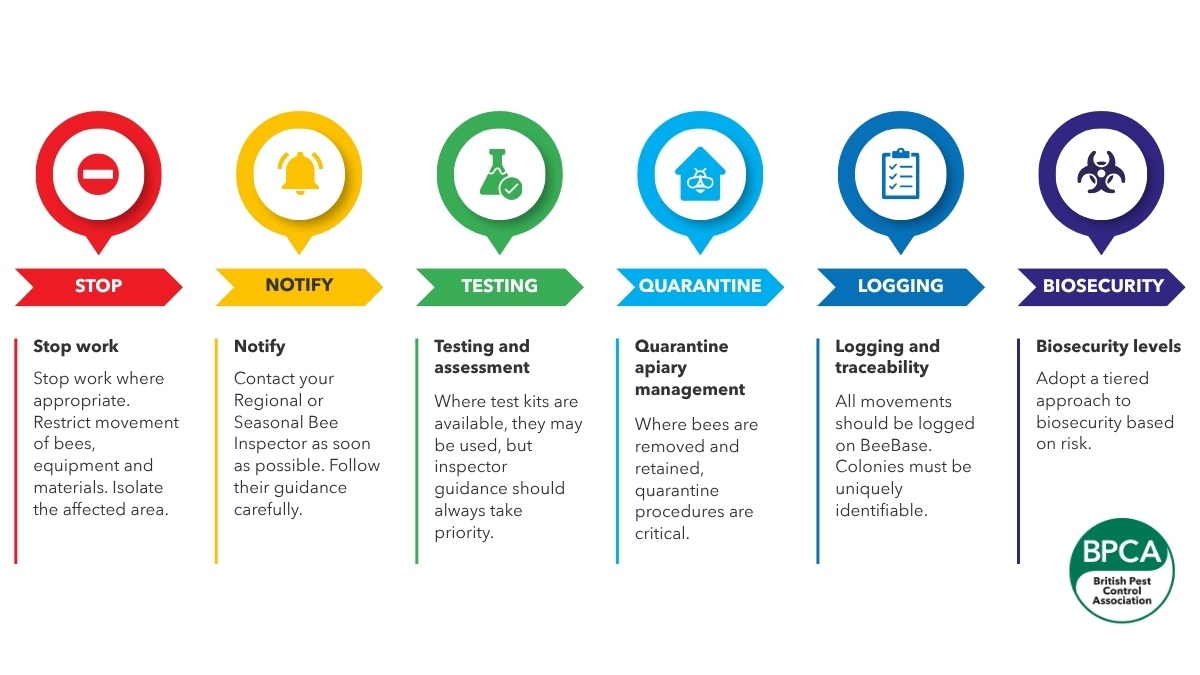
1. Stop work
- Stop work where appropriate, whilst maintaining the building condition
- Restrict movement of bees, equipment and materials
- Isolate the affected area.
2. Notify
Contact your Regional or Seasonal Bee Inspector as soon as possible. Follow their guidance carefully.
3. Testing and assessment
Where test kits are available, they may be used, but inspector guidance should always take priority.
You should be prepared to take samples and keep these isolated as these may need collecting by NBU staff.
Your response should be proportionate to the level of risk. Not every suspicion will be confirmed, but every suspicion should be treated seriously.
4. Quarantine apiary management
Where bees are removed and retained, quarantine procedures are critical.
Quarantine colonies should be managed carefully:
- Keep colonies on foundation where possible
- Monitor through at least two brood cycles
- Timing begins from the first egg laid post-removal.
Typically, this means:
- 7-8 weeks before health status is checked and if healthy, the colony can be relocated
- A similar timeframe before integration into a main apiary.
The quarantine clock restarts each time a new colony is added – five colonies could be in their 7th week of quarantine, and introducing a new colony with unclear health status could seed infection, for example, so quarantine apiary layout to minimise contact/drift is important if only a single site is to be used.
With good planning, up to three rotations per season may be achievable.
5. Logging and traceability
All movements should be logged on BeeBase. Colonies must be uniquely identifiable, whether they are kept in your own apiary or a third-party location.
6. Biosecurity levels
Adopt a tiered approach to biosecurity based on risk:
- Low risk: standard hygiene and monitoring
- High risk: stricter controls, limited movement and increased inspection.
Follow your hands
Working multiple bee jobs will likely require a clean down of tools and equipment, car door handles, telephones, etc. In the event of discovering a suspected notifiable disease, it’s especially important to be very conscious of hand contact and act accordingly.
Dealing with queen issues
If a colony loses or damages its queen, any intervention, such as combining colonies, should follow good bee husbandry principles. Avoid introducing unnecessary risk during quarantine.
Final thoughts
Bee disease management is about building awareness into everything you do.
In practice, that means:
- Checking local disease data before you attend site
- Being confident in identifying key diseases
- Maintaining strong biosecurity between jobs
- Acting quickly and appropriately if disease is suspected
- Keeping clear records throughout.
Working with bees carries a responsibility that goes beyond the immediate job. Disease can spread quickly and have serious consequences for beekeepers and the wider environment.
By taking a structured, professional approach to disease awareness and biosecurity, you not only protect the bees but also safeguard your business and the industry's reputation as a whole.
Once you’ve finished reading this guidance, you can take the Bee disease awareness and biosecurity CPD quiz (login required).
BPCA makes strenuous efforts to ensure the accuracy and current relevance of its publications, which are intended for use by technically competent persons.
However, this does not remove the need for technical and managerial judgement in practical situations. Nor do they confer any immunity or exemption from relevant legal requirements, including by-laws.
If you suspect something in this document is incorrect or out of date, please report it to
technical@bpca.org.uk so we can review it.
Created in collaboration with the National Bee Unit and UK Bee Removers (UKBR).